Our Community
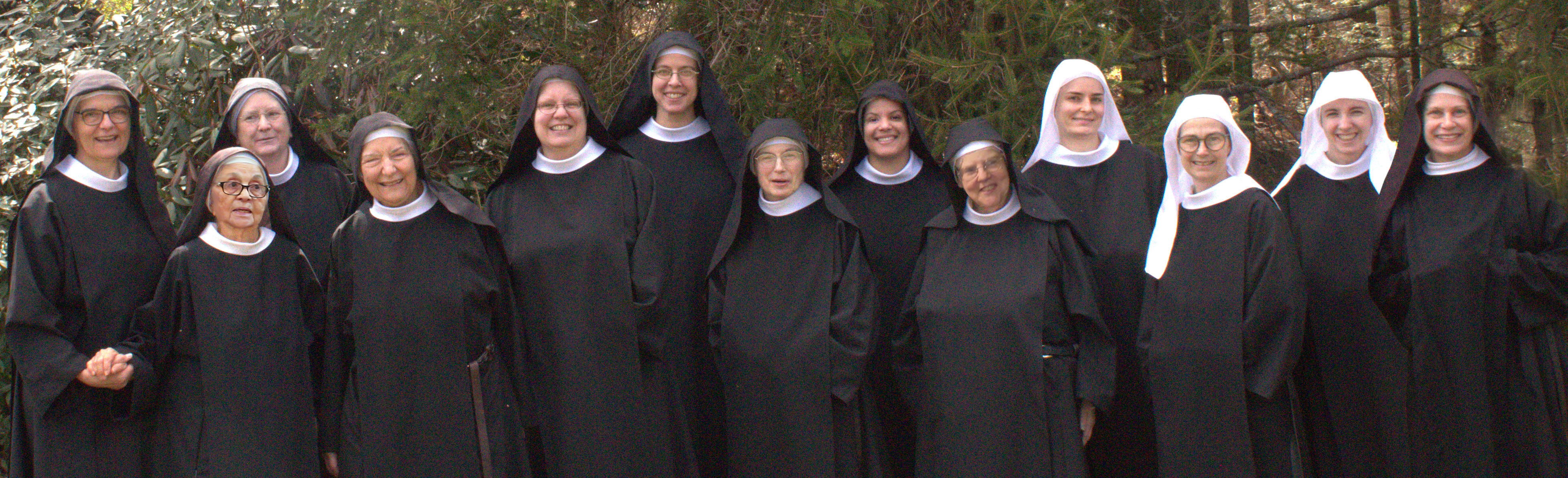
St. Scholastica Priory, a contemplative monastery of Roman Catholic nuns, follows the Rule of St. Benedict, written about 530 A. D. As Benedictines, we are not considered part of an order in the modern sense: our house is autonomous, but we are aggregated to the international Subiaco-Cassinese federation of Benedictine monasteries.
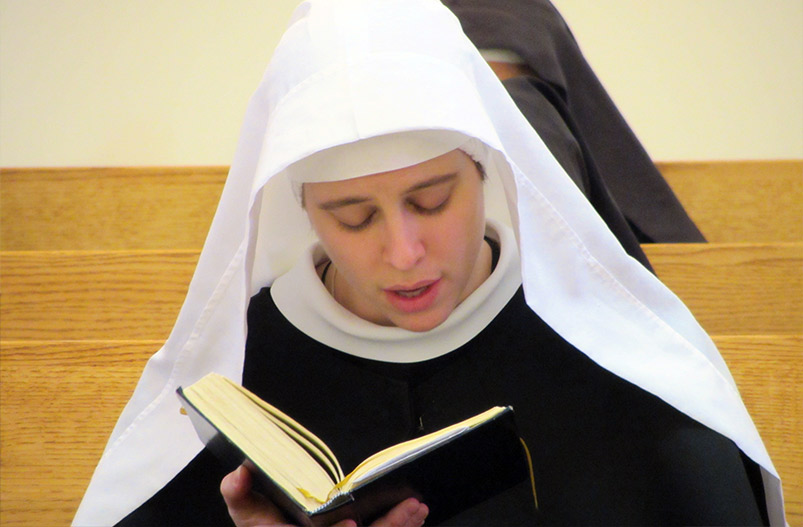
The aim of our life is the search for God and union with him through prayer. The celebration of Holy Mass and the seven hours of the Divine Office is primary in our lives: the nuns’ chief role in the Church is prayer, not only for ourselves, but for the world. Christ is the Intercessor for mankind, and we have a call to participate in his intercession for the world in a particular way. Lectio Divina, the slow, meditative reading of Sacred Scripture, fosters a loving attention to God’s word daily speaking to us through the scriptures. Eucharistic Adoration on First Fridays and weekly Benediction nourish our union with Christ.
In order to nuture prayer and an awareness of God’s presence, our work is carried out within the enclosure of the monastery and, as much as possible, in a spirit of silence and recollection. We do not have external apostolate such as teaching or nursing, but the Benedictine charism of hospitality – the reception of guests as Christ – is an outflowing of our love of Christ and neighbor.
What do we do?
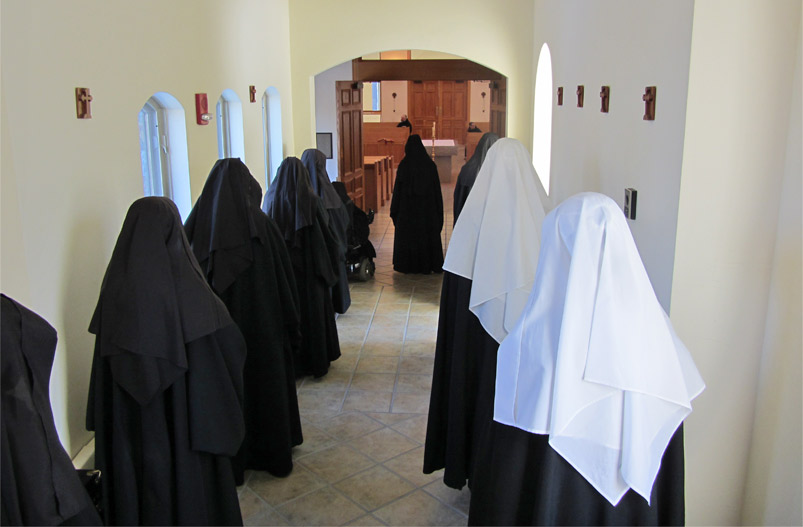
The question is often asked of cloistered monks and nuns: “What do you do all day?” The answer is: “Mostly we pray.” Approximately six-and-a-half hours of our day are devoted to the liturgy, lectio divina, and private prayer. During our work time, we do all the other things everybody else does in running a normal household: cooking, cleaning, welcoming guests, and supporting ourselves. We sew our own habits, veils and choir robes. Wood-carving, weaving, gardening, greeting the guests, secretarial duties to keep up with the flow of letters and requests for prayers: there’s always more than enough to do!
Monasteries are self-supporting, receiving no funds from the diocese, and our main means of support at this time comes from an annual appeal to benefactors throughout the country. In order to live by St. Benedict’s injunction that “monks should live by the labor of their hands,” we are at present looking for a viable means of support consonant with our lives: cheesemaking is the most promising.
History
St. Scholastica Priory traces its origins back to a Roman Catholic student study group, formed in the late 1940s, that evolved into an association of laywomen in private vows. In 1978, Stanbrook Abbey in England sent two nuns for our canonical formation as Benedictines. On September 8, 1984 three major events occurred in the history of our community: the first group of nuns made their solemn profession as Benedictine nuns, our foundress Mother Mary Clare Vincent was elected as the first prioress, and we were thereby established as an independent priory of pontifical right, directly under the Holy See.
In 1985, the community moved to Petersham, Massachusetts, on a forest tract of 200 acres purchased by a benefactor. Located in central Massachusetts near the Quabbin Reservoir, the largest body of water in Massachusetts, the property is surrounded by 10,000 acres of conservation land. This quiet natural setting is conducive to the solitude helpful in the search for God.
In 1995, St. Scholastica Priory was aggregated to the international Subiaco Congregation (now Subiaco-Cassinese Congregation), to which our monks also belong. In 2009, the community of Our Lady Queen, Tickfaw, Louisiana, which had been our daughter house, moved and we formed one community.
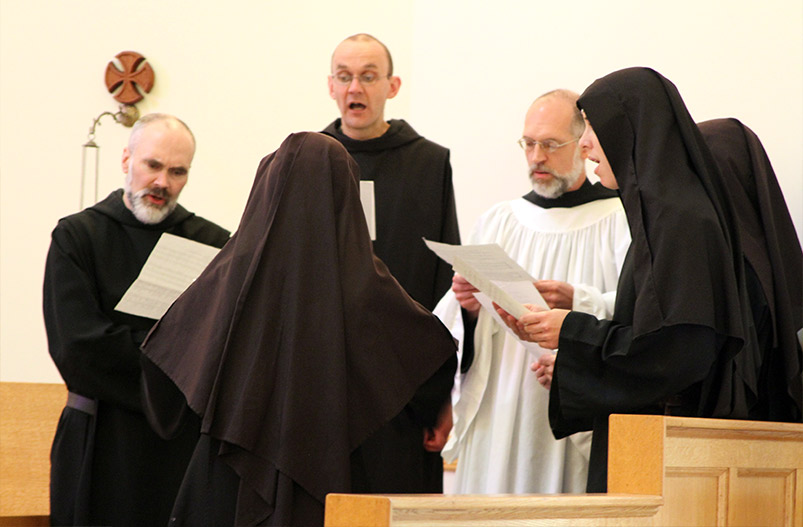
Twin Community
Following a tradition that goes back to the early Middle Ages, we are a twin community with the Benedictine monks of St. Mary’s Monastery. We pray the liturgy in common, some classes are shared together, and we have common recreation once a week. Each community has a separate legal entities, each with our own monastery and governance, but we are united in prayer, charity and the Benedictine way of life.
LINKS
- Monasteries:
- Subiaco Cassinese Congregation
- The Benedictine Confederation of Congregations
- St. Mary's Monastery Our brother Benedictine monks